
HEALTH THREATS | HYBRID CONFLICTS | PSYCHOINTELLIGENCE
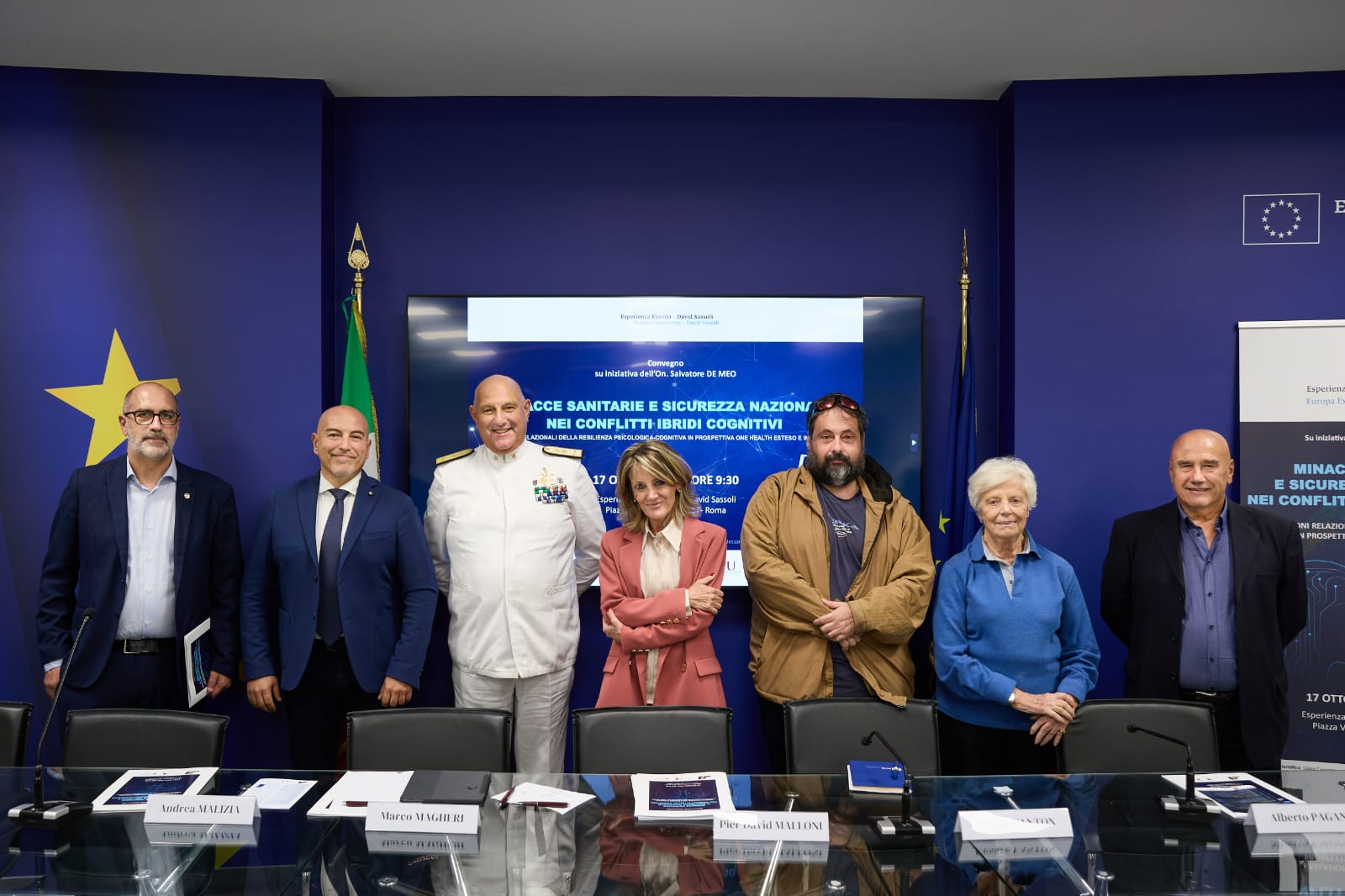
Health has become a domain of hybrid and cognitive warfare, affecting national security and the resilience of social cohesion. This was the starting point of the conference Health Threats and National Security in Hybrid Cognitive Conflicts, devoted to the theme The Relational Dimensions of Psychological-Cognitive Resilience from an Extended One Health and Intelligence Perspective, held on Saturday, 17 October, at Esperienza Europa – David Sassoli in Rome.
At the heart of the discussion was a shift from analysing individual risk factors to examining the connections between phenomena and, above all, the relationships that can either amplify vulnerabilities or strengthen individual and collective resilience. The event was organised by CeAS – Centre for Advanced Studies, in collaboration with I.PSI.trauma.MED and IPU – Pontifical Salesian University, under the patronage of ICS – International Conflict Society. It brought together experts in intelligence, healthcare, geopolitics, psychology and technology.
Following institutional greetings by Carlo Corazza, Claudio Casini and Salvatore De Meo, and an introduction by historian Maria Gabriella Pasqualini, the programme unfolded across three panels focusing on medical intelligence, the extended One Health approach and the governance of health resilience. The conference also featured the presentation of Liuva Capezzani’s book Health and Security: Interdisciplinary Perspectives of Interest for the Extended One Health and Intelligence Approach.
Medical Intelligence, NATO and Hybrid Conflicts
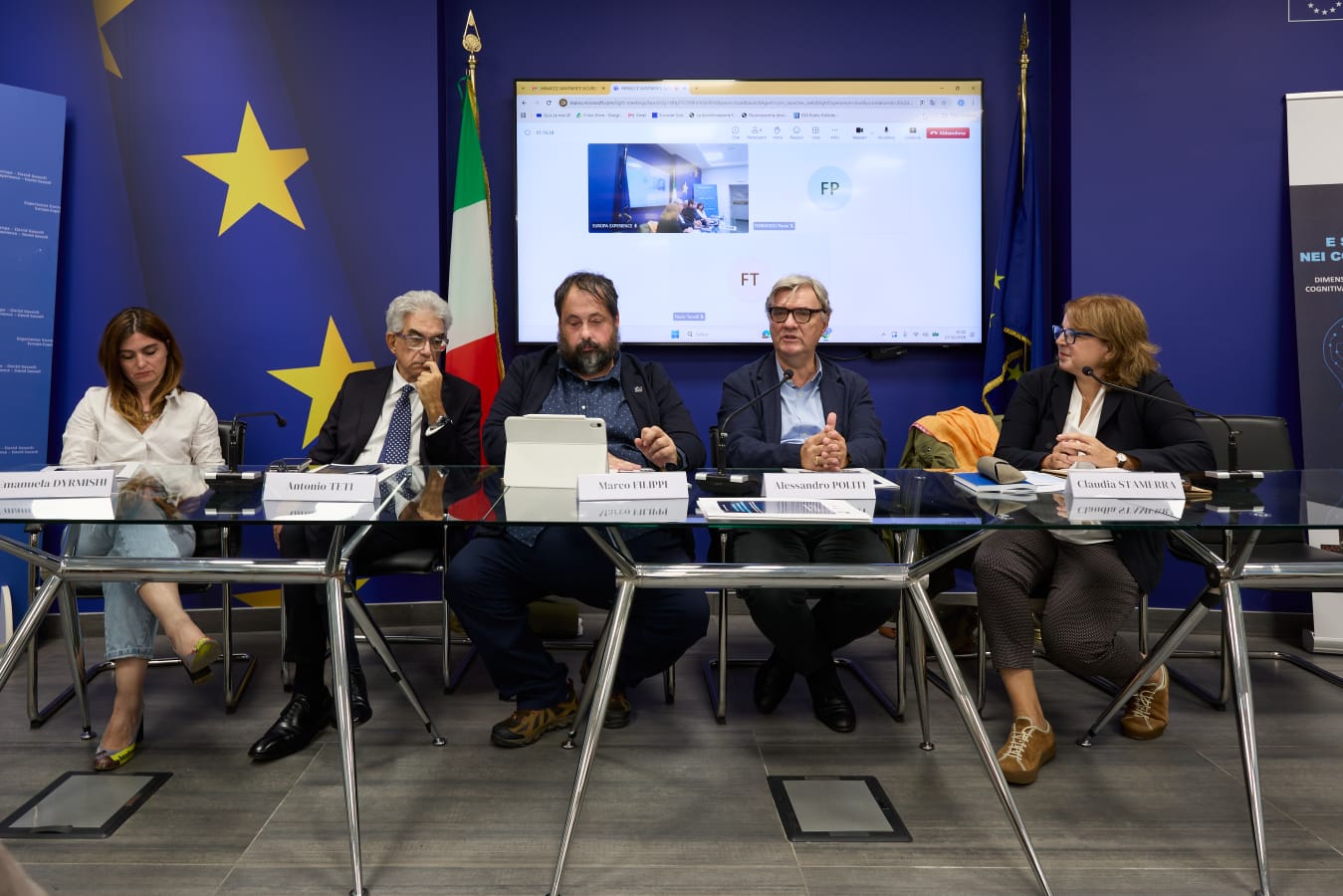
The first panel, moderated by journalist Claudia Stamerra, examined the relationship between NATO doctrine, health preparedness and hybrid conflicts. Marco Filippi, an expert in crisis management, CBRNe and counter-terrorism medicine, highlighted how the pandemic demonstrated the importance of complementing standard procedures with proactive analytical capabilities.
One example was the difficulty of studying patients who had died of Covid-19, when health precautions initially placed limits on further investigation into the disease. Another was the reported arrival of fresh blood supplies for Russian military personnel ahead of the actual invasion of Ukraine.
“Intelligence plays a crucial role in integrating these assessments, providing additional tools to understand what is happening and prepare for what might happen,” Filippi explained.
The aim is not to replace health authorities, but to give decision-makers further information with which to assess threats and organise an effective response. Alessandro Politi, director of the NATO Defense College Foundation, stressed the need for international coordination.
“We are here to avoid being caught unprepared, as happened with Covid, and to work towards a common approach, rather than everyone fending for themselves,” Politi said.
Emanuela Dyrmishi, a psychiatrist and psychotherapist who previously served as a migration specialist in reception centres in the Canton Ticino, Switzerland, explored the relationship between mental health, migration and national security. She emphasised that security extends beyond state borders to encompass economic, industrial, health, food and social dimensions. Political rhetoric, she warned, can fuel fear and conflict, including by conflating regular migration with asylum applications. Prevention and integrated policies that take pharmacological, psychological and social factors into account are essential to reducing tensions.
Antonio Teti, head of applied and administrative sectors, technological innovation, cybersecurity and artificial intelligence at the University of Chieti-Pescara, addressed the risks associated with reliance on artificial intelligence systems, which are increasingly used to obtain health advice. The same technologies can also be deployed for propaganda and public opinion manipulation. Among the examples he cited were the growth of social media profiles suspected of being fake during the Russia-Ukraine conflict and the military applications of agentic artificial intelligence.
Extended One Health and Psychointelligence
The second panel explored the evolution of the One Health approach, which links human health to animal and plant health and environmental conditions, towards an extended model that conceives of health as a circular system encompassing digital, psychological and relational dimensions. Alberto Mantovani, a member of the Risk Assessment Committee of the European Chemicals Agency (ECHA), recalled that the international definition adopted in 2021 resulted from collaboration between the World Health Organization (WHO), the Food and Agriculture Organization of the United Nations (FAO), the World Organisation for Animal Health and the United Nations Environment Programme.
Liuva Capezzani, a psychologist and psychotherapist, lecturer at the University of Tuscia, and head of I.PSI.trauma.MED and the Psychointelligence Observatory, returned to the central premise that health has become an infrastructure of national security, exposed to the same hybrid and cognitive threats that target democratic institutions, shape perceptions of reality and risk undermining trust between citizens and institutions.
However, Capezzani argued, countering health threats cannot stop at the early warning of global biological crises or at cognitive sovereignty, as advocated by NATO. The cognitive structures responsible for discernment and critical thinking develop on the basis of primary bonds of psychobiological attunement and reach maturity at around the age of twelve.
“To strengthen the defensive effort advocated by NATO, we must therefore start at the beginning: protecting the quality of caregiving relationships between adults and minors, which subsequently reverberates in the quality of relationships between adults and institutions.”
From this perspective, Capezzani proposed a three-level resilience paradigm:
- Psychological security: primary prevention of vulnerabilities in early attachment relationships.
- Cognitive security: secondary prevention once cognitive structures have matured.
- Psychological-cognitive security: tertiary prevention through the strengthening of collective networks and social cohesion.
“Today, there is a great deal of connectivity but little cohesion. At the third level, we need to bring these two dimensions into alignment,” Capezzani said.
She places this paradigm within the epistemological framework and practice of Psychointelligence, an emerging field concerned with anticipating signs of relational vulnerability and, consequently, preventing fractures and weaknesses in cognitive resilience. This is not a form of clinical diagnosis, but an activity to be developed through cooperation between health institutions, law enforcement agencies and defence organisations.
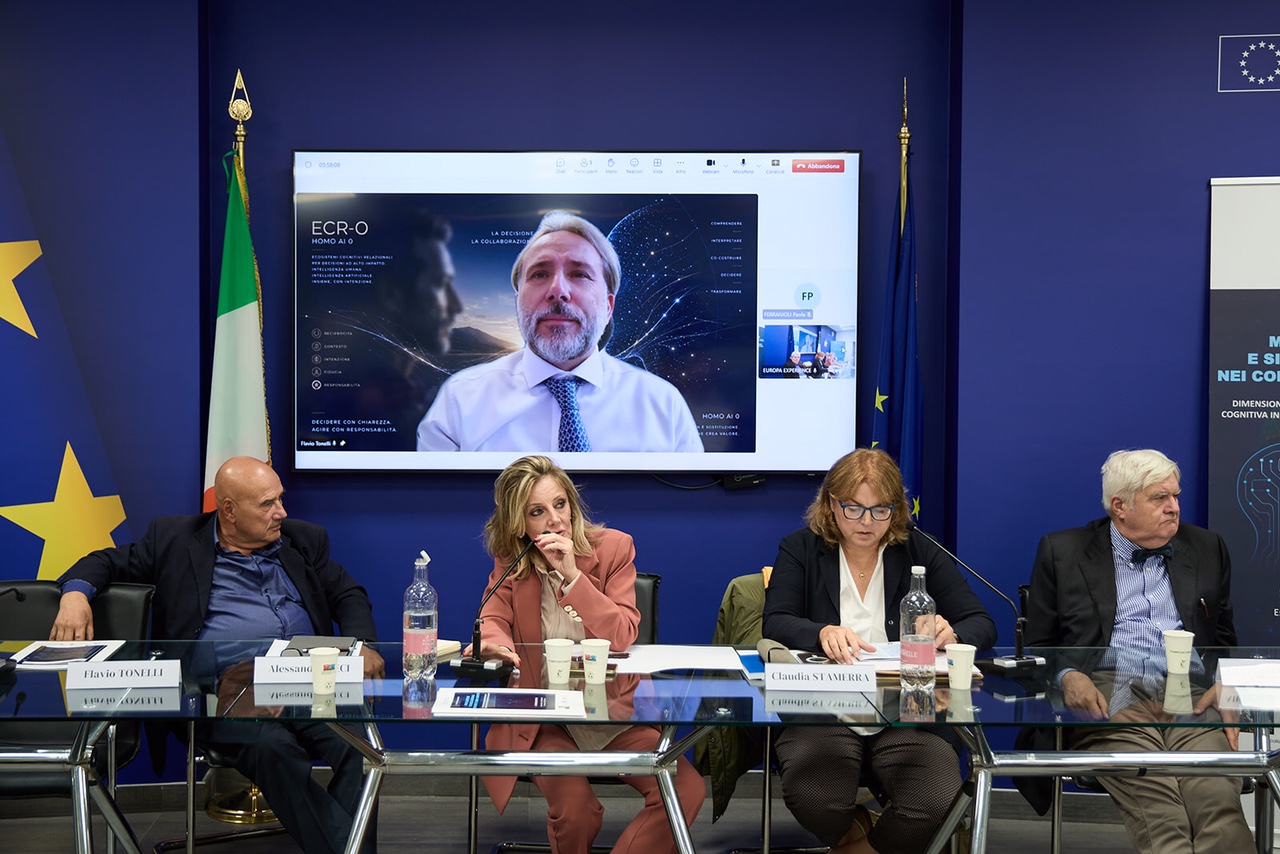
Flavio Tonelli presented Homo AI 0 and Relational Cognitive Ecologies. His central argument was that when artificial intelligence becomes an established part of cognitive and organisational processes, it ceases to be merely a tool that provides answers. Instead, it becomes part of an ecology of knowledge in which human experience, machine capabilities and their interaction reshape the ways people decipher situations and act.
To navigate this landscape, Tonelli proposed the ECR-0 model, a process leading from problem definition to decision-making. Criteria and constraints are established, actors and sources are identified, alternatives and objections are explored, and decisions are made and subsequently reviewed. At every stage, evidence is distinguished from persuasion, because fluency and a confident tone are not proof. Each step actively seeks dissent and preserves the “memory of reasons” that led to a conclusion.
For Tonelli, one principle remains fundamental: processing information and making decisions are two distinct activities. He illustrated this through a diagnostic example: AI may flag an anomaly in an image, but assessing it within the broader clinical picture remains the specialist’s responsibility. The benefits of this approach, he argued, must not be taken for granted. They must be tested in real-world practice by measuring detected errors, traceable sources and reasoned revisions.
Health Resilience, Civil Defence and Crisis Preparedness
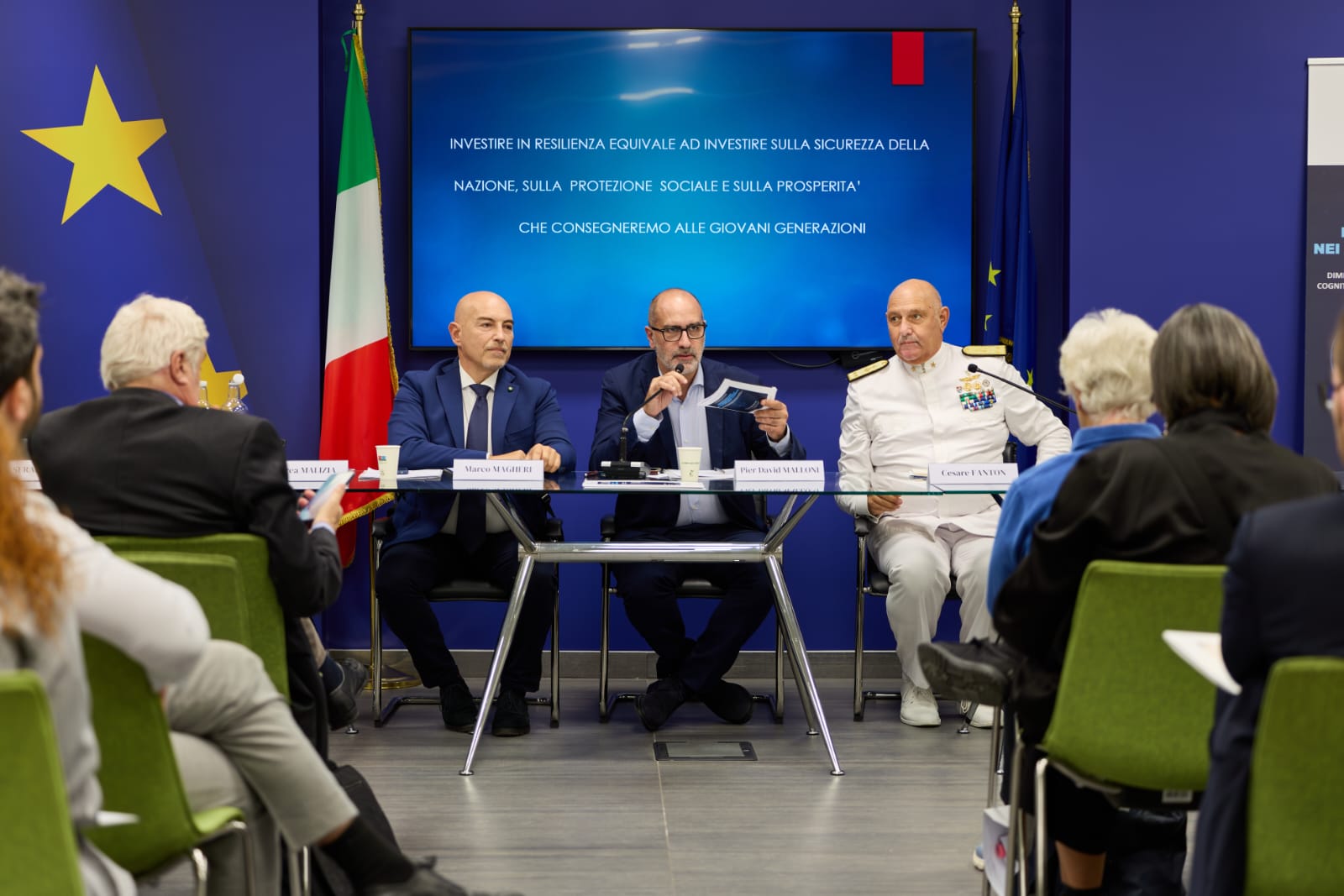
The third panel, moderated by Pier David Malloni, press officer at the Italian National Institute of Health, addressed the convergence of civil and military defence, health data management and epidemic intelligence. Speakers included Cesare Fanton, Andrea Malizia, Alberto Pagani, Marco Magheri and Marco Serale.
Admiral Inspector Cesare Fanton, who joined the Italian Navy in 1975, traced the evolution of crises from the Cold War to present scenarios, in which health emergencies, armed conflicts and hybrid threats can overlap.
“The threat is always the same, but today it moves much faster,” Fanton observed.
The Covid-19 experience highlighted the value of developing a national standard to harmonise training, planning and exercises, while assessing and validating the readiness of personnel and facilities.
“Medical intelligence must also be strengthened by developing an international network of researchers.”
For Fanton, preparedness must begin before an emergency occurs. Advisers and experts must be integrated into organisations before a crisis emerges. Joint planning, knowledge of the local context and the integration of different areas of expertise are essential to identifying warning signs promptly and supporting decision-making.
Addressing CBRNe emergencies, Andrea Malizia, an associate professor of Nuclear Measurements and Instrumentation at the University of Rome Tor Vergata, stressed the need to coordinate first responders with specialised advisers. Risks include the release of chemical, biological and nuclear agents, contamination of indoor environments and vulnerabilities affecting critical infrastructures, including hospitals.
“Emergencies can overlap and require a cross-sectoral response.”
Malizia also highlighted the opportunities artificial intelligence offers for risk management, alongside the challenges posed by excessive automation and statistical errors.
From the Perception of Insecurity to Collective Resilience
In his closing remarks, Alessandro Ceci, lecturer at IPU – Pontifical Salesian University and director of CeAS, focused on the gap between available expertise and the growing perception of insecurity.
“The threat does not come only from what we already know, but above all from what we are not yet able to see,” Ceci observed.
He called for a reassessment of the tools used to interpret emerging risks and addressed the relationship between power and fear.
“We are accustomed to thinking that power serves to counter insecurity, whereas we should also ask ourselves how power itself can produce and fuel it, using fear as an instrument of control.”
This reflection also extends to the Internet and digital technologies, whose functioning and capacity to influence behaviour and opinions require closer scrutiny.
The common thread running through the contributions was the need to coordinate healthcare, intelligence and defence, integrating expertise and information to improve prevention. The challenge concerns not only the response to emergencies, but also the ability to identify vulnerabilities early and establish a coordinated approach to crisis management. The violent demonstrations unfolding in recent days, too, form part of this broader perspective on hybrid conflict.
AUTHOR
Sandroni | ItaliensPR
Photos by Alessio Panunzi